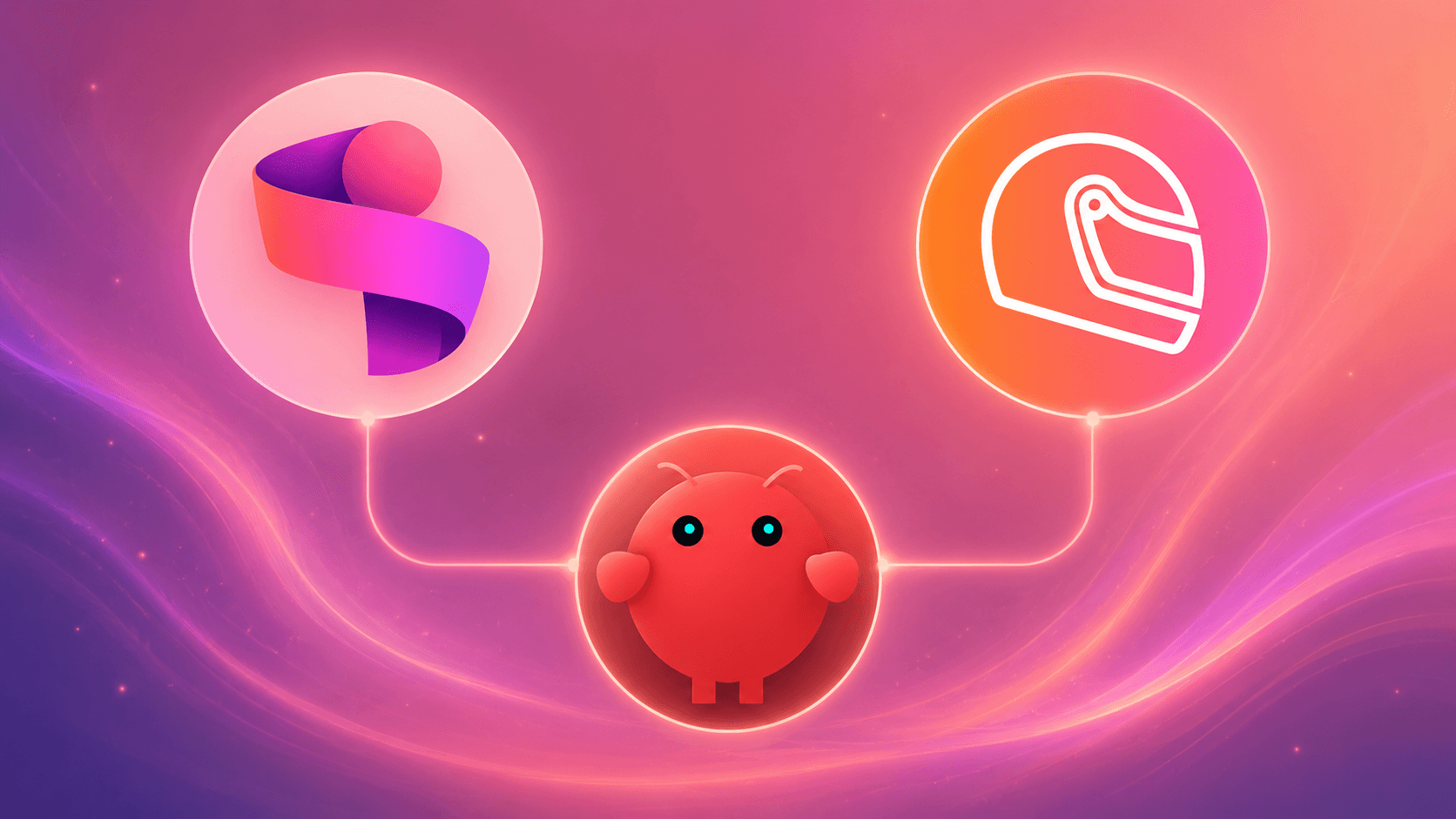
HubSpot vs RapidStart CRM: The Real Difference Is Where AI Lives

HubSpot has done a good job making CRM and AI approachable.
It has CRM. Marketing. Sales. Service. Content. Automation. Breeze AI. Breeze Agents. HubSpot Credits. A polished customer platform that puts a lot of tools in one place.
For some companies, that is exactly what they want.
But for Microsoft-first businesses, there is a different question worth asking:
Do you want AI inside HubSpot, or do you want AI working across the Microsoft business platform you already use?
That is the real difference between HubSpot and RapidStart CRM with RapidClaw.
HubSpot brings AI into HubSpot.
RapidStart CRM with RapidClaw brings Azure-powered AI agents into your Microsoft business platform.
HubSpot Is a Customer Platform. RapidStart CRM Is a Microsoft-Native CRM Foundation.
HubSpot is built to become the center of your customer operations. Your CRM, marketing, sales, service, content, automation, and AI all live inside HubSpot.
That can be convenient.
It can also become another platform to manage, integrate, govern, and pay for.
RapidStart CRM takes a different path.
RapidStart CRM is built on Microsoft Dataverse and Power Platform. It is designed for companies already using Microsoft 365, Outlook, Teams, SharePoint, Power Automate, Power BI, Azure, and Microsoft identity.
Instead of pulling customer operations into another SaaS island, RapidStart CRM keeps customer data in the Microsoft business application stack.
That matters more now than it did a few years ago.
Because CRM data is no longer just sales data.
It is the operating memory for AI.
RapidClaw Brings Azure into the CRM Story
RapidStart CRM provides the CRM foundation.
RapidClaw extends that foundation with Azure-powered AI agents.
That means RapidClaw is not just another embedded CRM assistant. It brings Azure infrastructure, AI agent execution, model choice, and runtime capability into the RapidStart platform.
The result is a different architecture.
HubSpot Breeze works inside HubSpot.
RapidClaw agents can work around CRM records, Dataverse data, Microsoft 365 activity, Power Platform workflows, and Azure-based AI services.
The CRM becomes the control plane. The agents do the work.
The AI Pricing Models Are Very Different
Assuming the required user licenses are already covered on both sides, the AI pricing comparison is simple.
HubSpot Breeze uses HubSpot Credits for certain AI and automation actions. Some AI features may be included with a HubSpot plan, but when Breeze performs certain tasks, credits may be consumed. As usage grows, customers may need more credits, credit packs, pay-as-you-go overages, or higher credit limits.
RapidClaw is different.
RapidClaw costs are primarily:
- The Azure VM or Azure infrastructure used to run it.
- The model usage consumed by the AI models selected.
That changes the economics.
RapidClaw is not priced like a per-agent SaaS feature bundle. It is closer to deploying an AI-capable runtime into the customer’s Microsoft/Azure environment.
With RapidClaw, you pay for the machine and the model usage.
With Breeze, you consume HubSpot’s packaged AI inside HubSpot.
Model Choice Is Another Big Difference
Breeze is designed to abstract the model away from the customer. HubSpot manages the AI experience behind the scenes. That is easier, but it also means the customer is not generally choosing which model powers each AI workload.
RapidClaw is built around model choice.
With access to more than 1,900 model options, customers can choose the right model for the job.
A simple classification task does not need the same model as deep account research.
A high-volume background process does not need the same economics as a sensitive customer-facing interaction.
A company might use a smaller, lower-cost model for routine CRM summaries, a stronger model for complex reasoning, and an approved model for sensitive workloads.
That is the difference between packaged AI and AI infrastructure.
Breeze chooses the model for you. RapidClaw lets you choose the model for the job.
Pricing Starts One Way and Grows Another
HubSpot can look very attractive at the beginning.
For small teams, Starter-level HubSpot pricing can be lower than a Microsoft-native CRM approach.
That is fair.
But the real pricing question is not what CRM costs on day one.
The real question is what happens as you grow.
- What happens when you add users?
- What happens when you need automation?
- What happens when marketing, service, reporting, permissions, integrations, and AI become part of the system?
- What happens when Breeze usage grows?
- What happens when you need more HubSpot hubs, seats, contacts, credits, or advanced features?
HubSpot grows by adding hubs, seats, contact tiers, credits, and platform capabilities.
RapidStart CRM grows differently.
RapidStart CRM keeps CRM simple and extends through Microsoft Power Platform, Dataverse, Azure, and optional add-ons like RapidClaw.
The point is not that HubSpot is always more expensive.
The point is that HubSpot grows like a SaaS platform.
RapidStart CRM grows like a Microsoft business application foundation.
That is a very different long-term shape.
Security and Governance: Where Do You Want Control to Live?
HubSpot has real security and governance capabilities. It has account controls, permissions, audit logs, AI settings, sensitive data features, and AI model cards.
The argument is not that HubSpot is insecure.
The argument is about where governance lives.
HubSpot governs AI inside HubSpot.
RapidStart CRM with RapidClaw lets Microsoft-first companies govern CRM and AI through Microsoft Dataverse, Power Platform, Azure, and their existing Microsoft security model.
That matters when AI stops being a writing assistant and starts working around customer data, CRM records, emails, activities, documents, cases, workflows, and business processes.
The first governance question is simple:
What data is the AI allowed to see?
With RapidStart CRM, the customer data lives in Dataverse. Dataverse security roles, Microsoft identity, environment controls, and auditing become part of the governance foundation.
With RapidClaw, the AI agent layer extends into Azure, where infrastructure, runtime, model selection, and operational control can be designed around the customer’s Microsoft cloud standards.
That gives Microsoft-first companies a cleaner governance story.
Sensitive business data does not need to become HubSpot-centered just to use AI.
When HubSpot Is the Better Fit
HubSpot may be the better choice if you want a broad all-in-one customer platform.
If you want CRM, marketing automation, sales tools, service tools, content, commerce, workflows, and AI in a single SaaS system, HubSpot is strong.
If you want HubSpot to become the center of customer operations, Breeze is a natural AI layer.
That is HubSpot’s lane. And it is a good one.
When RapidStart CRM Is the Better Fit
RapidStart CRM is the better fit when your company already runs on Microsoft and you want CRM to align with that environment.
It is a better fit if you want:
- A simpler CRM than HubSpot, Salesforce, or Dynamics 365 Sales.
- Customer data in Dataverse.
- Native alignment with Microsoft 365.
- A practical foundation for Outlook, Teams, SharePoint, Power Automate, Power BI, and Azure.
- Azure-powered AI agents through RapidClaw.
- Model choice from more than 1,900 options.
- AI costs based on infrastructure and model usage instead of SaaS credits.
- Security and governance aligned with Microsoft, Dataverse, and Azure.
RapidStart CRM is not trying to become another giant customer platform.
That is the point.
The future of CRM is not more tabs, more fields, more dashboards, and more software for users to babysit.
The future CRM is simpler.
It is the governed customer data foundation.
It is the observability layer.
It is the control plane for AI-driven work.
The Bottom Line
HubSpot is an AI-powered customer platform.
RapidStart CRM is a Microsoft-native CRM extended by Azure-powered AI agents.
HubSpot puts AI into HubSpot.
RapidStart CRM with RapidClaw connects CRM, Dataverse, Power Platform, Microsoft 365, and Azure into a practical foundation for AI-powered work.
So the question is not just:
Which CRM has AI?
The better question is:
Where do you want your AI to live?
If the answer is HubSpot, Breeze makes sense.
If the answer is Microsoft, Dataverse, Power Platform, and Azure, RapidStart CRM with RapidClaw is the better architecture.